How to Choose the Right Pet Food: Complete Nutrition Guide for Dogs and Cats 2026
Learn how to select the best pet food for your dog or cat with our comprehensive nutrition guide. Discover ingredient analysis, dietary requirements, and feeding tips for optimal pet health.
How to Choose the Right Pet Food: Complete Nutrition Guide for Dogs and Cats 2026
Selecting the right food for your dog or cat is one of the most important decisions you'll make as a pet owner. With countless brands, formulas, and dietary philosophies competing for your attention, navigating the pet food aisle can feel overwhelming. This comprehensive guide will help you understand pet nutrition fundamentals, decode ingredient labels, and make informed choices that support your companion's health and longevity.
Understanding Pet Nutritional Requirements
Dogs and cats have distinct nutritional needs shaped by millions of years of evolution. While dogs are omnivores with some dietary flexibility, cats are obligate carnivores requiring specific nutrients found primarily in animal tissues.
Essential Nutrients for Dogs
Dogs require a balanced diet containing proteins, fats, carbohydrates, vitamins, and minerals. High-quality animal proteins should form the foundation of their diet, providing essential amino acids for muscle maintenance, immune function, and overall health. Fats supply concentrated energy and facilitate absorption of fat-soluble vitamins. While dogs can digest carbohydrates, these should come from wholesome sources like sweet potatoes, brown rice, or oats rather than cheap fillers.
Adult dogs typically need a diet containing 18-25% protein and 10-15% fat, though these requirements vary based on age, activity level, and health status. Puppies and pregnant or nursing dogs require higher protein and fat levels to support growth and milk production. Senior dogs may benefit from moderate protein levels with enhanced joint-supporting nutrients.
Essential Nutrients for Cats
Cats have more stringent dietary requirements than dogs. As obligate carnivores, they need high levels of animal protein—typically 30-40% or more in their diet. Cats cannot synthesize certain nutrients like taurine, arachidonic acid, and vitamin A from plant sources, making animal-based ingredients essential.
Taurine deficiency can lead to serious health problems including dilated cardiomyopathy and vision issues. Quality cat foods contain adequate taurine from meat sources or supplementation. Cats also have limited ability to digest carbohydrates, so foods with excessive grain content may not meet their nutritional needs optimally.
Decoding Pet Food Labels
Understanding pet food labels is crucial for making informed choices. The Association of American Feed Control Officials (AAFCO) sets standards for pet food labeling, but knowing how to interpret these labels requires some education.
Ingredient List Analysis
Ingredients are listed by weight in descending order. The first five ingredients typically comprise the majority of the food's content. Look for specific named proteins (chicken, beef, salmon) rather than generic terms like "meat meal" or "animal by-products."
Whole meat ingredients contain significant water weight, so their position on the label can be misleading. Meat meals (chicken meal, fish meal) are concentrated protein sources with water removed, often providing more actual protein than whole meat listed first. A food listing "chicken, chicken meal, brown rice" may contain more total chicken protein than one listing "chicken, corn, wheat, chicken fat."
Be cautious of ingredient splitting—a practice where manufacturers list different forms of the same ingredient separately to make it appear lower on the list. For example, a food might list "ground corn, corn gluten meal, and corn bran" separately rather than combining them as "corn products," which might otherwise appear as the first ingredient.
Guaranteed Analysis
The guaranteed analysis provides minimum percentages of crude protein and fat, and maximum percentages of crude fiber and moisture. However, these figures don't tell the whole story about food quality or digestibility.
Comparing foods with different moisture contents requires converting to a dry matter basis. Wet foods typically contain 75-80% moisture, while dry foods contain about 10%. To compare accurately, calculate the nutrient percentage after removing water content. This reveals that many wet foods actually contain higher protein percentages than they initially appear.
AAFCO Statements
Look for AAFCO nutritional adequacy statements indicating the food is "complete and balanced" for specific life stages. Foods meeting AAFCO standards have either undergone feeding trials or been formulated to meet established nutrient profiles.
Feeding trial statements ("Animal feeding tests using AAFCO procedures substantiate...") indicate the food has been tested on actual animals, providing more confidence than formulation alone. However, formulated foods meeting AAFCO profiles can still be nutritionally adequate.
Types of Pet Food
Pet food comes in various forms, each with advantages and considerations.
Dry Kibble
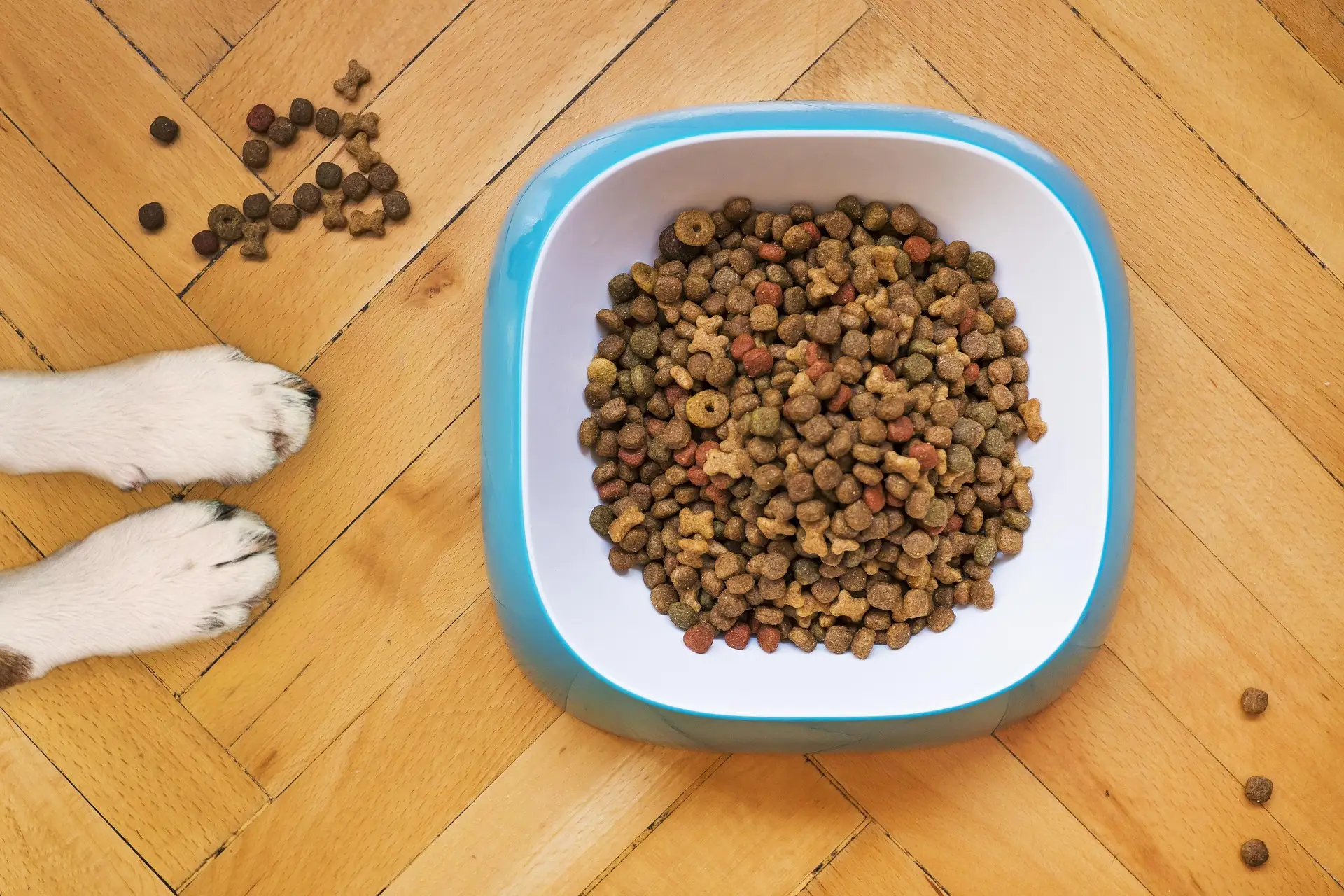
Dry food offers convenience, affordability, and dental benefits through mechanical cleaning action. Quality kibbles provide complete nutrition and have long shelf life. However, the high-temperature processing required to create kibble can reduce nutrient bioavailability, and many kibbles contain significant carbohydrate content.
When selecting kibble, prioritize brands using quality protein sources, minimal fillers, and natural preservatives like mixed tocopherols (vitamin E) rather than synthetic preservatives like BHA or BHT.
Wet/Canned Food
Canned foods typically contain higher protein levels and moisture content, supporting hydration—particularly important for cats prone to urinary issues. The higher moisture content also provides more volume with fewer calories, beneficial for weight management.
Quality canned foods often contain fewer carbohydrates and more recognizable ingredients than kibble. However, they're more expensive, have shorter shelf life once opened, and may contribute less to dental health.
Raw Diets
Raw feeding has gained popularity among pet owners seeking to mimic ancestral diets. Proponents cite benefits including improved coat condition, better dental health, and increased energy. However, raw diets carry risks including bacterial contamination, nutritional imbalances if not properly formulated, and potential for intestinal obstruction from bones.
If considering raw feeding, work with a veterinary nutritionist to ensure the diet is complete and balanced. Commercial raw foods undergo high-pressure pasteurization to reduce bacterial risks while maintaining nutritional integrity.
Fresh/Refrigerated Foods
Fresh pet foods represent a growing category, offering minimally processed nutrition with human-grade ingredients. These foods are gently cooked to eliminate pathogens while preserving nutrients. They're typically more expensive but may offer superior digestibility and palatability.
Special Dietary Considerations
Many pets have specific needs requiring specialized nutrition.
Food Allergies and Sensitivities
True food allergies are relatively uncommon in pets, but food sensitivities causing digestive upset or skin issues are more prevalent. Common allergens include beef, dairy, wheat, chicken, and soy.
Limited ingredient diets featuring novel proteins (venison, duck, rabbit) or hydrolyzed proteins can help identify and manage food sensitivities. Elimination diets, conducted under veterinary supervision, systematically identify problem ingredients.
Weight Management
Pet obesity has reached epidemic proportions, with over 50% of dogs and cats overweight or obese. Weight management foods reduce calorie density while maintaining satiety through increased fiber and protein.
However, simply feeding less of a regular food may create nutrient deficiencies. Weight loss should be gradual (1-2% body weight per week) and monitored by a veterinarian to ensure adequate nutrition while reducing calories.
Life Stage Nutrition
Puppies and kittens require higher protein, fat, and calcium levels to support rapid growth. Large breed puppies need carefully controlled calcium and phosphorus ratios to prevent developmental orthopedic diseases.
Senior pets may benefit from enhanced antioxidants, joint-supporting nutrients like glucosamine and chondroitin, and adjusted protein levels. However, healthy senior pets don't necessarily require reduced protein—in fact, high-quality protein helps maintain muscle mass.
Medical Conditions
Various health conditions require dietary modification. Kidney disease patients need restricted phosphorus and sometimes protein. Diabetic pets benefit from high-protein, low-carbohydrate diets. Pets with urinary crystals may need pH-adjusted foods.
Prescription diets formulated for specific conditions should be used under veterinary guidance, as they're designed to manage disease rather than prevent it in healthy animals.
Evaluating Pet Food Quality
Beyond label reading, several factors indicate food quality.
Manufacturing Standards
Look for foods manufactured in facilities following Good Manufacturing Practices (GMP) and conducting regular quality testing. Companies should have veterinary nutritionists on staff and be transparent about sourcing and manufacturing.
Foods made in countries with stringent regulations (United States, Canada, Western Europe, Australia, New Zealand) generally have better quality control than those from countries with less oversight.
Ingredient Sourcing
Quality brands source ingredients from reputable suppliers and conduct incoming ingredient testing. Human-grade ingredients meet higher safety standards than feed-grade ingredients, though both can be nutritionally adequate.
Be wary of vague sourcing claims. "Natural" is largely unregulated and doesn't guarantee quality. "Organic" indicates ingredients were grown without synthetic pesticides but doesn't necessarily mean better nutrition.
Company Reputation and Recalls
Research company history, including recall records. While recalls aren't always indicative of poor quality—sometimes they demonstrate good quality control—frequent recalls or serious contamination issues raise red flags.
Established companies with long track records and transparent communication generally inspire more confidence than newer brands making extraordinary claims.
Transitioning to New Food
When changing your pet's diet, transition gradually over 7-10 days to prevent digestive upset. Start by mixing 25% new food with 75% old food for 2-3 days, then 50/50 for 2-3 days, then 75% new to 25% old for 2-3 days before switching completely.
Monitor your pet during transition for signs of digestive issues like vomiting, diarrhea, or decreased appetite. Some pets have sensitive stomachs requiring even slower transitions.
Feeding Guidelines and Portion Control
Feeding guidelines on pet food packages provide starting points but aren't one-size-fits-all. Individual needs vary based on metabolism, activity level, and environment.
Monitor your pet's body condition score—you should be able to feel ribs easily without excess fat covering, see a waist when viewed from above, and observe an abdominal tuck when viewed from the side. Adjust portions based on body condition rather than strictly following package recommendations.
Conclusion
Choosing the right pet food requires understanding your pet's unique nutritional needs, carefully evaluating ingredient quality, and monitoring your pet's response to their diet. The "best" food varies for each individual pet based on age, health status, activity level, and personal tolerance.
Work with your veterinarian to develop a nutrition plan tailored to your pet's needs. Quality nutrition is an investment in your pet's health, potentially preventing costly medical issues and supporting a longer, healthier life. By becoming an informed consumer and prioritizing your pet's nutritional needs, you provide the foundation for optimal health and wellbeing throughout their life.