Dog Training Tips for Beginners in 2026: Positive Reinforcement Methods That Actually Work
Master the fundamentals of dog training with this comprehensive beginner's guide. Learn positive reinforcement techniques, common training mistakes to avoid, and step-by-step instructions for teaching essential commands to your new puppy or adult dog.
Dog Training Tips for Beginners in 2026: Positive Reinforcement Methods That Actually Work
Bringing a dog into your life is one of the most rewarding experiences you can have, but it also comes with responsibilities—chief among them is training. Whether you've just welcomed a bouncing puppy or adopted an adult dog, proper training is essential for creating a harmonious household and ensuring your dog's safety and happiness. In 2026, our understanding of canine learning and behavior has reached new heights, and modern training methods emphasize positive reinforcement over outdated punishment-based techniques.
This comprehensive guide will walk you through everything you need to know about training your dog, from understanding the principles of effective training to teaching specific commands and addressing common behavioral challenges. By the end, you'll have the knowledge and confidence to build a strong, positive relationship with your canine companion through training that's both effective and enjoyable for both of you.
Understanding How Dogs Learn
Before diving into specific training techniques, it's crucial to understand the fundamentals of how dogs learn. This knowledge forms the foundation of all successful training and helps you avoid common mistakes that can hinder progress.
The Science of Positive Reinforcement
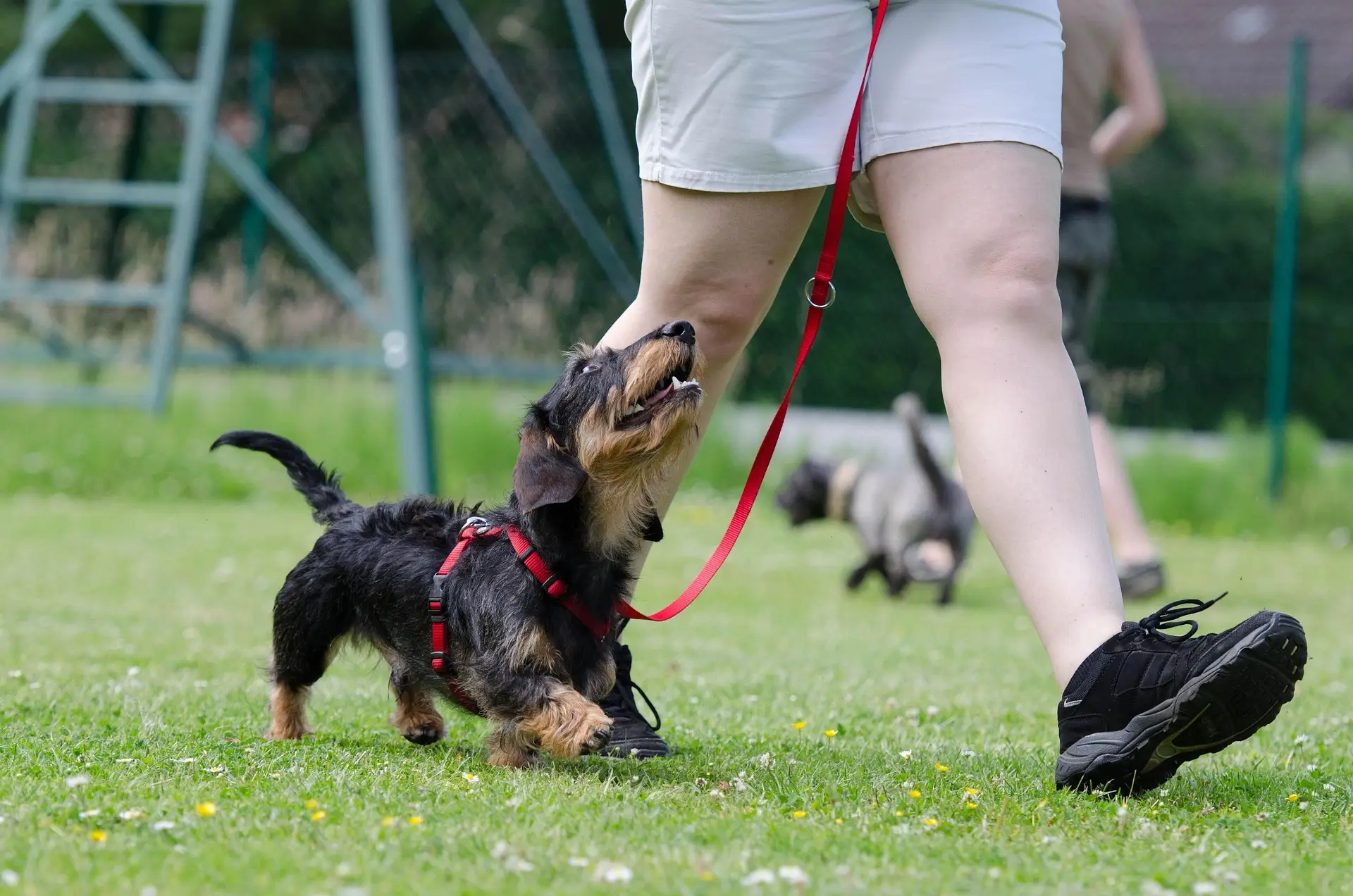
Positive reinforcement is the cornerstone of modern dog training. This approach involves rewarding behaviors you want to see more of, making it more likely your dog will repeat those behaviors in the future. When your dog sits on command and receives a treat, praise, or play, they learn that sitting when asked leads to good things.
Research in animal behavior has consistently shown that positive reinforcement is not only more humane than punishment-based methods but also more effective in the long term. Dogs trained with positive reinforcement show less stress, form stronger bonds with their owners, and are more eager to learn. They're also less likely to develop behavioral problems like aggression or anxiety.
The key to effective positive reinforcement is timing. Rewards must come immediately after the desired behavior—within one to two seconds—for your dog to make the connection. This is why many trainers use marker words like "yes!" or clickers to precisely mark the moment a dog performs the correct behavior, followed quickly by a reward.
Understanding Motivation
Different dogs are motivated by different things. Some dogs will do anything for food, while others are more motivated by toys, play, or praise. Understanding what motivates your individual dog is essential for effective training.
Most dogs respond well to high-value food treats during training sessions—small pieces of chicken, cheese, or commercial training treats work well. However, don't rely solely on food. Incorporate praise, petting, and play as rewards too. This creates a more well-rounded training approach and ensures your dog will respond even when treats aren't available.
The Importance of Consistency
Consistency is perhaps the most critical element of successful dog training. Everyone in your household must use the same commands and enforce the same rules. If one person allows the dog on the furniture while another doesn't, you're sending mixed signals that will confuse your dog and slow training progress.
Consistency also means training regularly. Short, frequent training sessions—five to ten minutes, several times a day—are far more effective than occasional long sessions. Dogs have relatively short attention spans, and frequent repetition helps solidify learning.
Setting Up for Training Success
Before you begin formal training, create an environment that sets both you and your dog up for success.
Creating a Distraction-Free Environment
Start training in a quiet, familiar environment with minimal distractions. Your living room or backyard works well for initial training. As your dog masters commands in this controlled setting, gradually introduce distractions—other people, other dogs, outdoor environments—to help them generalize the behavior to different contexts.
Many beginners make the mistake of trying to train in highly distracting environments too soon. If your dog can't focus on you because they're overwhelmed by their surroundings, learning won't happen effectively.
Gathering Training Supplies
You don't need expensive equipment to train your dog effectively. Essential supplies include:
- High-value treats cut into small pieces (about the size of a pea)
- A standard 6-foot leash for leash training
- A properly fitted collar or harness
- Optional: a clicker for marker training
- Toys for play rewards
- Patience and a positive attitude
Understanding Your Dog's Limits
Recognize that puppies have shorter attention spans than adult dogs and tire more easily. Young puppies (under 12 weeks) should have very brief training sessions—just a few minutes at a time. Adult dogs can handle longer sessions, but even they benefit from keeping training sessions short and fun.
Also consider your dog's physical limitations. Some breeds are more energetic and require more exercise before they can focus on training, while others may have physical constraints that affect certain exercises.
Essential Commands Every Dog Should Know
These fundamental commands form the basis of good manners and safety for your dog. Master these, and you'll have a well-behaved companion.
Sit: The Foundation Command
"Sit" is typically the first command taught because it's relatively easy for dogs to learn and forms the foundation for many other behaviors.
How to teach it:
- Hold a treat close to your dog's nose
- Move your hand up, allowing their head to follow the treat and causing their bottom to lower
- Once they're in a sitting position, say "sit," give them the treat, and share affection
- Repeat this sequence several times daily until your dog masters it
Once your dog reliably sits when you use the hand motion, begin saying "sit" before the hand motion. Eventually, they'll respond to the verbal command alone.
Common mistakes to avoid:
- Don't push your dog's bottom down—let them figure out the movement themselves
- Don't repeat the command multiple times; say it once and wait
- Don't reward partial sits; wait for a complete sit before rewarding
Come (Recall): The Safety Command
A reliable recall can literally save your dog's life. Whether they've slipped their leash or are heading toward danger, the "come" command brings them back to safety.
How to teach it:
- Start in a low-distraction environment with your dog on a long leash
- Get down to their level and say their name followed by "come" in an excited, happy voice
- When they come to you, reward generously with treats and praise
- Practice frequently, gradually increasing distance and distractions
- Never call your dog to come for something unpleasant (like ending playtime or giving medicine)
Advanced tips:
- Practice recall during walks by calling your dog, rewarding them, and then releasing them to continue exploring
- Use high-value rewards for recall—this command should always be worth your dog's while
- Never punish your dog when they come to you, even if they took a long time or were misbehaving before
Stay: Building Impulse Control
"Stay" teaches your dog to remain in position until released, building impulse control and patience.
How to teach it:
- Ask your dog to sit
- Open your palm in front of you and say "stay"
- Take one step back. If they stay, return and reward
- Gradually increase the distance and duration
- Always return to your dog to reward them; don't call them to you, as this teaches them to break the stay
Progression tips:
- Start with very short durations (just a few seconds) and gradually increase
- Add the "three Ds" gradually: Distance, Duration, and Distractions
- Only increase one D at a time to avoid overwhelming your dog
- Use a release word like "okay" or "free" to signal when the stay is over
Down: A Calming Position
The "down" command is useful for keeping your dog calm in various situations and is often a prerequisite for more advanced training.
How to teach it:
- Hold a treat in your closed fist
- Hold your hand up to your dog's snout. When they sniff it, move your hand to the floor
- Their body should follow their head to the ground
- Once they're in the down position, say "down," give the treat, and praise
- Repeat until they master it
Troubleshooting:
- If your dog stands up instead of lying down, try teaching this on a raised surface like a couch where they can't stand
- Some dogs resist lying down because it feels vulnerable; be patient and make it rewarding
- You can lure them under a low obstacle (like your leg) to encourage the down position
Leave It: Preventing Problems
"Leave it" tells your dog to ignore something they're interested in, whether it's food on the ground, another dog, or any potential danger.
How to teach it:
- Hold a treat in both hands
- Show your dog one enclosed fist with the treat inside and say "leave it"
- Ignore any behaviors (licking, pawing, barking) until they pull away
- When they pull away, give them the treat from the other hand
- Progress to placing treats on the floor and eventually to real-life situations
Real-world applications:
- Preventing your dog from eating something dangerous on walks
- Stopping them from chasing cats or other animals
- Teaching them to ignore food on counters or tables
House Training: Establishing Good Habits
House training is often the most pressing concern for new dog owners. With consistency and patience, most dogs can be reliably house trained within a few weeks to a few months.
Understanding Your Dog's Needs
Puppies need to eliminate frequently—typically after waking up, after eating, after playing, and every few hours in between. Adult dogs can hold it longer but still need regular bathroom breaks, usually every 4-6 hours at minimum.
The House Training Process
- Establish a routine: Take your dog out at the same times each day
- Choose a bathroom spot: Always take them to the same area
- Use a command: Say something like "go potty" while they're eliminating
- Reward immediately: Praise and treat right after they finish
- Supervise constantly: When inside, keep your dog where you can watch them
- Use confinement wisely: Crate training or using a small room helps prevent accidents
- Clean accidents thoroughly: Use enzymatic cleaners to remove all scent
Recognizing Warning Signs
Learn to recognize when your dog needs to go out: sniffing the ground, circling, whining, or heading toward the door. Respond immediately to these signals.
Dealing with Accidents
Accidents will happen, especially with puppies. Never punish your dog for accidents—this creates fear and can actually slow house training. If you catch them in the act, calmly interrupt and take them outside immediately. Clean the area thoroughly to remove any scent that might attract them back to the same spot.
Common Training Mistakes and How to Avoid Them
Even well-intentioned owners make mistakes that can hinder training progress. Being aware of these common pitfalls helps you avoid them.
Inconsistency
Using different commands for the same behavior, allowing rules to be broken sometimes but not others, or having family members enforce different standards confuses your dog. Establish clear rules and ensure everyone follows them consistently.
Expecting Too Much Too Soon
Dogs learn at different rates, and some behaviors take longer to master than others. Pushing too hard or expecting perfection too quickly leads to frustration for both you and your dog. Celebrate small victories and progress gradually.
Using Punishment
Yelling, hitting, or using shock collars damages your relationship with your dog and can create fear, anxiety, and aggression. These methods might suppress behaviors temporarily, but they don't teach your dog what you want them to do instead. Positive reinforcement is always more effective and humane.
Training When Frustrated
If you're feeling frustrated or impatient, end the training session. Dogs are incredibly perceptive and will pick up on your negative emotions, which can make them anxious and less able to learn. Training should be fun for both of you.
Inadequate Exercise
A dog with pent-up energy can't focus on training. Ensure your dog gets adequate physical exercise before training sessions. A tired dog is a focused dog.
Socialization: A Critical Component of Training
While not technically "training" in the traditional sense, socialization is crucial for developing a well-adjusted dog. Proper socialization during the critical period (roughly 3-14 weeks for puppies) helps prevent fear and aggression later in life.
What to Socialize Your Dog To
Expose your dog to a wide variety of:
- Different types of people (various ages, sizes, appearances)
- Other dogs and animals
- Different environments (urban, rural, indoor, outdoor)
- Various sounds (traffic, appliances, thunder)
- Different surfaces (grass, concrete, gravel, stairs)
- Handling (touching paws, ears, mouth for grooming and vet care)
How to Socialize Safely
Make all experiences positive by pairing them with treats and praise. Never force your dog into situations that frighten them; instead, let them approach new things at their own pace. If your dog shows fear, back up to a distance where they're comfortable and gradually work closer over multiple sessions.
For puppies not yet fully vaccinated, socialize in safe environments and with dogs you know are healthy and vaccinated. Carry young puppies in public places to expose them to sights and sounds without risk of disease.
When to Seek Professional Help
While many owners successfully train their dogs using the methods described here, some situations warrant professional assistance:
- Aggression toward people or other animals
- Severe anxiety or fear issues
- Persistent behavioral problems despite consistent training
- If you feel overwhelmed or unsure how to proceed
Professional dog trainers and veterinary behaviorists have extensive experience and can provide personalized guidance. Group training classes also offer socialization opportunities and structured learning environments.
Maintaining Training Throughout Your Dog's Life
Training isn't something you do for a few months and then stop. Dogs need ongoing mental stimulation and reinforcement of learned behaviors throughout their lives.
Continue practicing commands regularly, even after your dog has mastered them. Incorporate training into daily life—ask for a sit before meals, practice recall during walks, and reward good behavior whenever you notice it. This ongoing reinforcement keeps skills sharp and strengthens your bond with your dog.
Conclusion
Training your dog is one of the most important investments you can make in your relationship. While it requires time, patience, and consistency, the rewards are immeasurable: a well-behaved companion who understands what you expect, a stronger bond built on trust and communication, and a dog who's safer and more confident in various situations.
Remember that every dog is an individual. What works quickly for one dog might take longer for another. Celebrate your dog's unique personality and progress at their own pace. Stay positive, keep training sessions fun, and don't hesitate to seek help when needed.
The journey of training your dog is ongoing, but with the principles and techniques outlined in this guide, you're well-equipped to raise a happy, well-mannered canine companion. The effort you put into training today will pay dividends for years to come, creating a harmonious household and a dog who's a joy to live with. Your commitment to positive, effective training is one of the greatest gifts you can give your dog—and yourself.