Arctic Animals Survival Adaptations: How Wildlife Thrives in Extreme Cold 2026
Explore the remarkable survival adaptations of Arctic animals. Learn how polar bears, Arctic foxes, and other wildlife survive extreme cold through specialized physical and behavioral traits.
Arctic Animals Survival Adaptations: How Wildlife Thrives in Extreme Cold 2026
The Arctic represents one of Earth's most challenging environments, where temperatures plummet to -40°C (-40°F) or lower, darkness persists for months during winter, and food becomes scarce. Yet this harsh landscape teems with life, from massive polar bears to tiny Arctic foxes, each possessing remarkable adaptations enabling survival in conditions that would quickly kill most organisms. Understanding these adaptations reveals nature's ingenuity and the incredible resilience of Arctic wildlife.
Physical Adaptations for Cold Survival
Arctic animals have evolved numerous physical features that minimize heat loss and maximize heat retention in frigid conditions.
Insulation: Fur, Feathers, and Blubber
Insulation is the first line of defense against Arctic cold. Most Arctic mammals possess thick fur coats with two layers: dense underfur providing insulation and longer guard hairs repelling water and wind.
Polar bears exemplify extreme insulation adaptation. Their fur consists of hollow, transparent guard hairs that appear white due to light scattering but actually lack pigment. These hollow hairs trap air, creating additional insulation. Beneath the fur lies black skin that absorbs heat from sunlight. Under the skin, a layer of blubber up to 11 centimeters (4.5 inches) thick provides further insulation and energy storage.
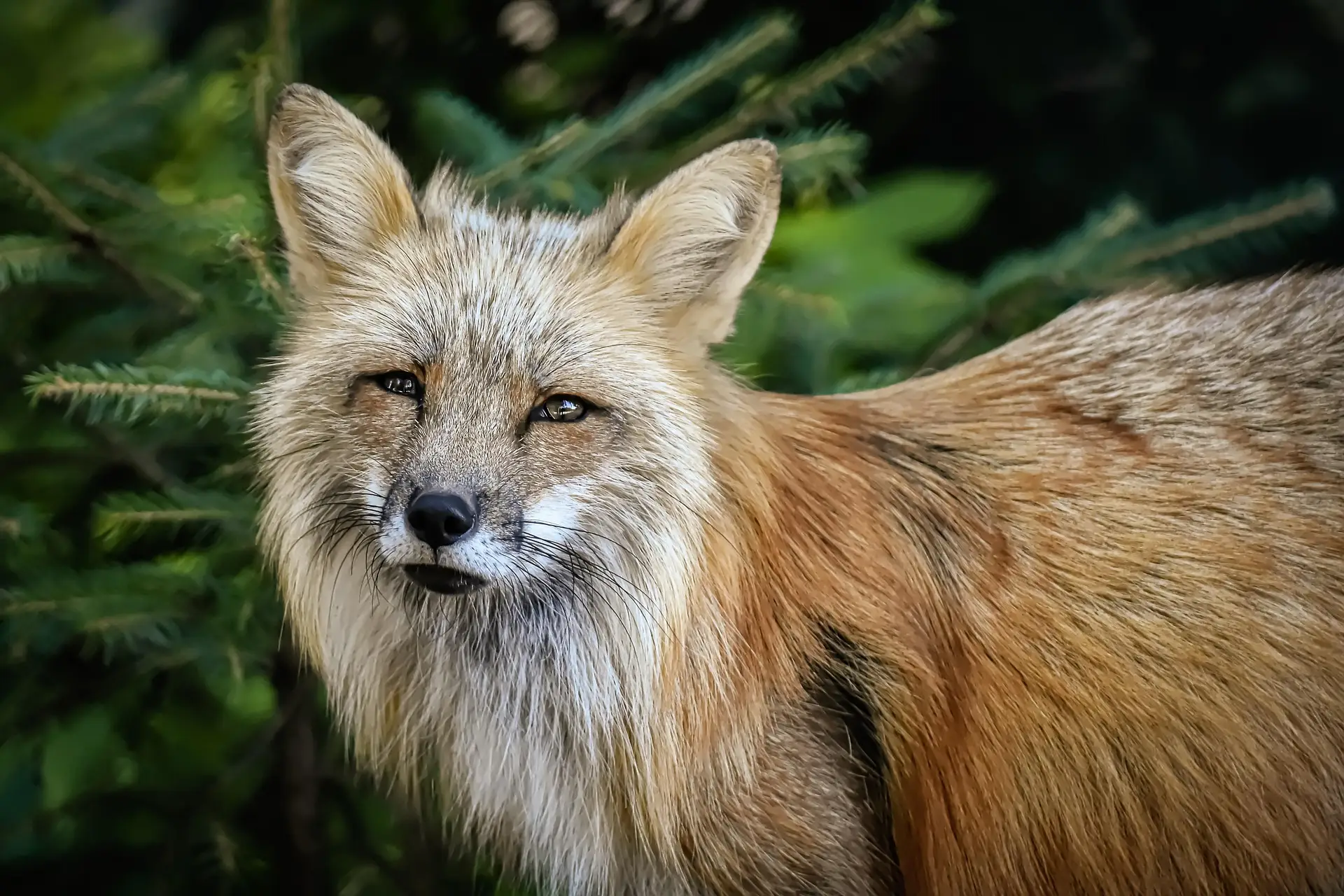
Arctic foxes possess the warmest fur of any mammal, with fur density reaching 70% greater than other fox species. Their winter coat is so effective that Arctic foxes don't begin shivering until temperatures drop below -70°C (-94°F)—far colder than they typically encounter.
Muskoxen sport the longest hair of any wild animal, with guard hairs reaching 60 centimeters (24 inches) in length. Beneath these guard hairs lies qiviut, an incredibly fine underwool eight times warmer than sheep's wool. This dual-layer system allows muskoxen to withstand Arctic blizzards that would kill most large mammals.
Marine mammals like seals and whales rely primarily on blubber rather than fur. Blubber—a specialized fat layer beneath the skin—provides both insulation and energy storage. Ringed seals maintain blubber layers up to 10 centimeters thick, while bowhead whales possess blubber up to 50 centimeters thick, enabling survival in ice-covered waters year-round.
Body Size and Shape: Bergmann's and Allen's Rules
Arctic animals tend to be larger than their temperate-zone relatives, following Bergmann's Rule, which states that body size increases in colder climates. Larger bodies have lower surface-area-to-volume ratios, reducing heat loss per unit of body mass.
Polar bears are the largest bear species, with males weighing 350-700 kilograms (770-1,540 pounds). This massive size helps conserve heat while providing the strength needed to hunt seals on sea ice.
Allen's Rule complements Bergmann's Rule, stating that animals in cold climates have shorter appendages (ears, tails, limbs) to minimize heat loss. Arctic foxes have noticeably shorter, rounder ears than their desert-dwelling relatives. Arctic hares possess shorter ears than temperate rabbits, and their legs are proportionally shorter relative to body size.
Countercurrent Heat Exchange
Many Arctic animals employ countercurrent heat exchange systems in their extremities to prevent heat loss while maintaining blood flow to feet, flippers, or fins.
In this system, arteries carrying warm blood from the body core run alongside veins returning cold blood from extremities. Heat transfers from warm arterial blood to cold venous blood before it reaches the body core, pre-warming returning blood while cooling blood flowing to extremities. This allows extremities to operate at much lower temperatures than the body core without causing overall heat loss.
Caribou legs can maintain temperatures near 0°C while their body core remains at 38°C. This adaptation prevents heat loss through legs while allowing mobility in deep snow. Similarly, Arctic seabirds maintain foot temperatures just above freezing while flying over icy waters.
Specialized Paws and Hooves
Arctic animals have evolved specialized feet for navigating snow and ice while minimizing heat loss.
Polar bears possess large paws—up to 30 centimeters (12 inches) in diameter—that distribute weight like snowshoes, preventing them from breaking through ice. Fur covering the paw pads provides insulation and traction on ice. Partially webbed toes aid swimming.
Arctic foxes grow thick fur on their paw pads during winter, providing insulation and traction. Snowshoe hares have large, furry hind feet that spread their weight, allowing them to run across snow surfaces that would trap smaller-footed animals.
Caribou hooves change seasonally. In summer, soft pads provide traction on tundra. In winter, these pads shrink, exposing the hard hoof rim, which cuts through ice and provides grip on frozen surfaces. The concave hoof bottom creates suction on ice, further improving traction.
Behavioral Adaptations
Physical adaptations alone cannot ensure survival—Arctic animals also employ sophisticated behavioral strategies to cope with extreme conditions.
Migration
Many Arctic species migrate seasonally, avoiding the harshest winter conditions while exploiting abundant summer resources.
Caribou undertake some of the longest terrestrial migrations, traveling up to 5,000 kilometers (3,100 miles) annually between summer calving grounds on the Arctic tundra and winter feeding areas in boreal forests. These migrations follow ancient routes, with knowledge passed from generation to generation.
Arctic terns hold the record for longest migration of any animal, flying approximately 70,000 kilometers (44,000 miles) annually from Arctic breeding grounds to Antarctic waters and back. This remarkable journey allows them to experience two summers per year, maximizing feeding opportunities.
Many seabirds, including puffins and guillemots, breed on Arctic cliffs during summer but spend winters in more temperate waters where food remains accessible. Whales like bowheads and belugas migrate between summer feeding grounds in ice-free Arctic waters and winter areas with less ice coverage.
Hibernation and Torpor
Some Arctic mammals avoid winter's worst conditions through hibernation or torpor—states of reduced metabolic activity that conserve energy when food is scarce.
Arctic ground squirrels are the only Arctic mammal capable of true hibernation, lowering body temperature to -3°C (27°F)—the lowest body temperature ever recorded in a mammal. Their blood develops antifreeze properties preventing ice crystal formation. They hibernate for up to eight months, surviving on fat reserves accumulated during brief Arctic summers.
Pregnant polar bears enter a state called winter dormancy in snow dens, where they give birth and nurse cubs without eating, drinking, urinating, or defecating for months. Unlike true hibernation, their body temperature drops only slightly, allowing them to remain alert to threats. Males and non-pregnant females remain active year-round, hunting seals on sea ice.
Food Caching and Storage
Many Arctic animals cache food during times of abundance for use during scarcity.
Arctic foxes cache excess food—primarily bird eggs and lemmings—in permafrost, which acts as a natural freezer. These caches may contain hundreds of items and remain viable for months or even years. Foxes remember cache locations with remarkable accuracy, retrieving stored food during winter when hunting is difficult.
Snowy owls cache lemming carcasses near nests during breeding season, ensuring food availability for chicks during periods of poor hunting. These caches can contain dozens of lemmings.
Social Thermoregulation
Some Arctic animals huddle together to conserve heat, reducing individual energy expenditure.
Muskoxen form defensive circles when threatened by predators, but they also huddle during blizzards, with calves protected in the center. This behavior reduces wind exposure and heat loss for all group members.
Emperor penguins—though Antarctic rather than Arctic—demonstrate the most extreme social thermoregulation, forming tightly packed huddles of thousands of individuals during Antarctic winter. Individuals rotate from the cold exterior to the warm interior, ensuring all members benefit from shared warmth.
Physiological Adaptations
Beyond physical features and behaviors, Arctic animals possess internal physiological adaptations supporting cold survival.
Metabolic Adjustments
Arctic animals often have elevated metabolic rates generating more body heat. However, this requires increased food intake, creating a delicate balance between heat production and energy availability.
Small Arctic mammals like lemmings and voles maintain high metabolic rates, requiring them to eat almost constantly. They remain active under snow (subnivean zone) throughout winter, where temperatures are warmer and more stable than on the surface.
Larger animals like polar bears can adjust their metabolic rate seasonally. During summer and fall when seals are abundant, they eat voraciously, building fat reserves. During winter, particularly when ice conditions limit hunting, they can lower their metabolic rate to conserve energy.
Antifreeze Proteins
Some Arctic fish and invertebrates produce antifreeze proteins (AFPs) preventing ice crystal formation in body fluids at temperatures below normal freezing points.
Arctic cod can survive in water at -1.9°C (28.6°F)—below the freezing point of normal fish blood—thanks to AFPs that bind to ice crystals, preventing them from growing large enough to damage cells. These proteins allow Arctic cod to thrive in ice-covered waters year-round, forming a crucial link in Arctic food webs.
Brown Fat and Non-Shivering Thermogenesis
Many Arctic mammals possess abundant brown adipose tissue (brown fat) capable of non-shivering thermogenesis—heat production without muscle contractions.
Brown fat contains numerous mitochondria with specialized proteins that generate heat rather than storing energy as ATP. This allows rapid heat production without the energy cost of shivering. Newborn Arctic mammals rely heavily on brown fat to maintain body temperature until their insulation develops fully.
Seasonal Adaptations
Arctic animals must cope with dramatic seasonal changes, including extreme day length variations and temperature swings.
Coat Color Changes
Many Arctic animals change coat color seasonally for camouflage. Arctic foxes, Arctic hares, and ptarmigan (Arctic grouse) sport white coats in winter for camouflage against snow, then molt to brown or gray summer coats matching tundra vegetation.
These color changes are triggered by day length rather than temperature, ensuring animals change color at appropriate times regardless of weather variations. The molt process requires significant energy and nutrient investment, particularly for the protein-rich hair or feather production.
Activity Pattern Adjustments
Arctic animals adjust activity patterns to match seasonal light conditions. During summer's 24-hour daylight, many animals remain active around the clock, maximizing feeding opportunities during the brief productive season.
During winter darkness, some animals like Arctic foxes and polar bears remain active, hunting by starlight, moonlight, and aurora. Their eyes contain a reflective layer (tapetum lucidum) enhancing night vision. Others like Arctic ground squirrels hibernate, avoiding the need to find food in darkness.
Reproductive Adaptations
Arctic animals have evolved reproductive strategies maximizing offspring survival in harsh conditions.
Timing of Reproduction
Most Arctic animals time reproduction so that energy-demanding periods (pregnancy, lactation, chick-rearing) coincide with summer abundance. Caribou calve in late May or early June when new vegetation emerges. Seabirds lay eggs in June or July when fish are abundant.
This synchronization requires precise timing. Animals use day length cues to trigger reproductive processes months in advance, ensuring offspring arrive when conditions are optimal.
Parental Investment
Arctic animals often show high parental investment, with extended care periods ensuring offspring develop survival skills before facing winter.
Polar bear cubs remain with mothers for over two years, learning hunting techniques and survival skills. Arctic fox parents both participate in raising pups, with fathers bringing food to dens while mothers nurse. Some Arctic seabirds feed chicks for months, allowing them to grow large enough to survive their first winter.
Climate Change Impacts
Arctic animals face unprecedented challenges as climate change warms the Arctic faster than any other region on Earth.
Sea ice loss threatens polar bears, which depend on ice platforms for seal hunting. Earlier spring ice breakup and later fall freeze-up reduce hunting seasons, forcing bears to fast longer. Some populations show declining body condition and reproductive rates.
Changing snow conditions affect species relying on subnivean spaces. Earlier snowmelt exposes lemmings and voles to predators and temperature extremes. Altered snow depth and density affect caribou ability to access winter forage.
Warming temperatures allow southern species to expand northward, increasing competition and predation pressure on Arctic specialists. Red foxes moving north compete with Arctic foxes for food and dens, sometimes killing Arctic fox pups.
Conclusion
Arctic animals demonstrate nature's remarkable capacity for adaptation, having evolved extraordinary features and behaviors enabling survival in one of Earth's most extreme environments. From polar bears' insulating fur and massive size to Arctic foxes' heat-conserving bodies and food-caching behaviors, each adaptation represents millions of years of evolutionary refinement.
However, these specialized adaptations that allow Arctic animals to thrive in extreme cold may become liabilities as the Arctic rapidly warms. Conservation efforts must address climate change while protecting Arctic habitats and minimizing human disturbance, ensuring these remarkable animals continue to inhabit Earth's northern reaches for generations to come.
Understanding Arctic animal adaptations not only reveals biological ingenuity but also emphasizes the interconnectedness of species and their environments. As the Arctic changes, so too must our efforts to protect the unique wildlife that calls this frozen realm home.