Octopus Intelligence Facts: Problem-Solving Abilities and Camouflage Techniques 2026
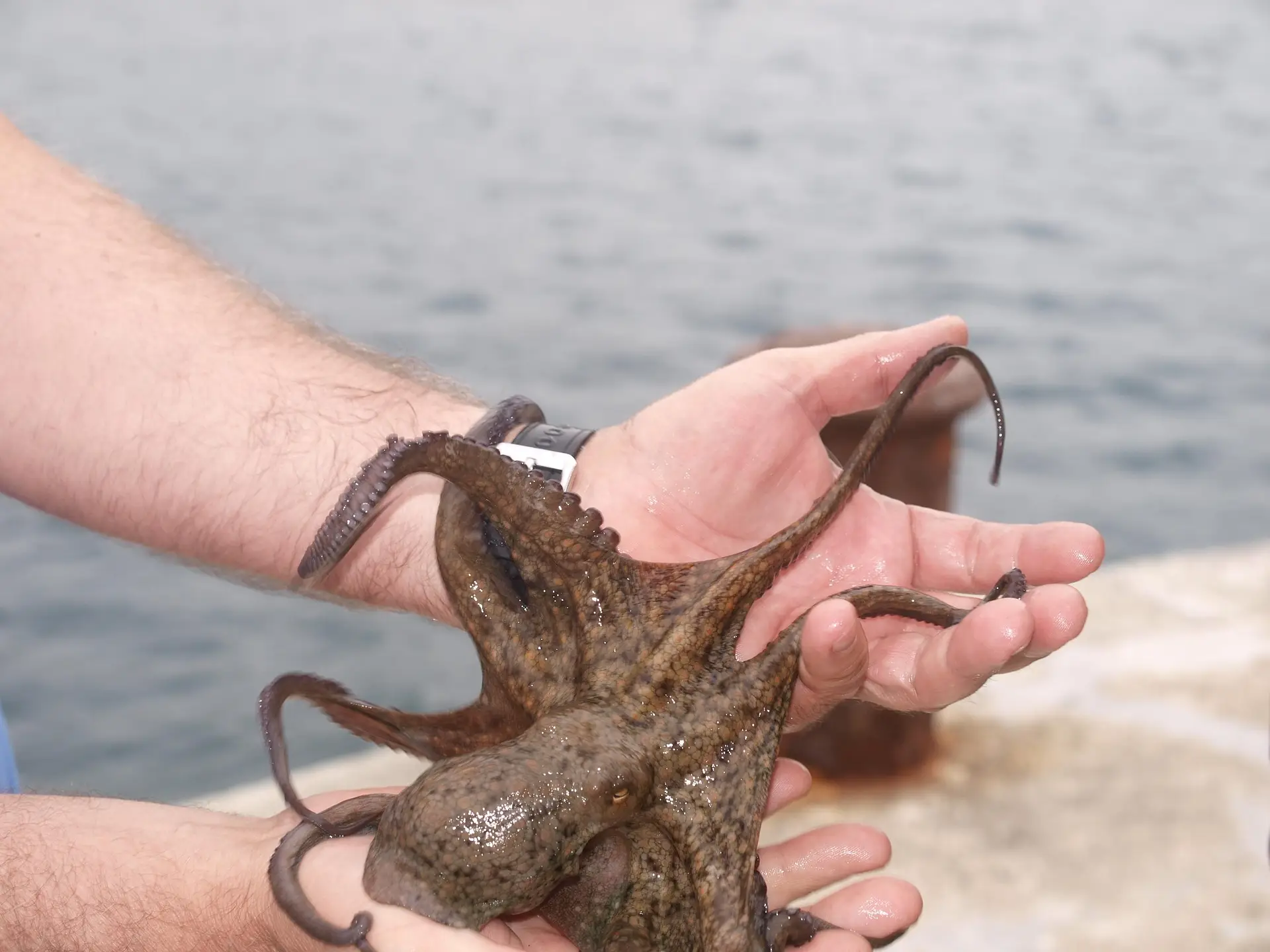
Discover the remarkable intelligence of octopuses. Learn about their problem-solving skills, advanced camouflage abilities, tool use, and complex nervous system that rivals vertebrate intelligence.
Octopus Intelligence Facts: Problem-Solving Abilities and Camouflage Techniques 2026
Octopuses represent one of nature's most remarkable examples of convergent evolution in intelligence. Despite being mollusks—relatives of clams and snails—octopuses have evolved cognitive abilities rivaling those of many vertebrates, including complex problem-solving, tool use, and learning capabilities. Their alien-like intelligence, combined with extraordinary camouflage abilities and unique nervous system architecture, makes octopuses among the most fascinating creatures in Earth's oceans.
The Octopus Brain: Distributed Intelligence
The octopus nervous system is fundamentally different from vertebrate brains, yet achieves comparable cognitive sophistication through alternative architecture.
Central and Peripheral Nervous Systems
An octopus possesses approximately 500 million neurons—comparable to a dog—but only 40% reside in the central brain. The remaining 60% are distributed throughout the eight arms, with each arm containing about 40 million neurons organized into ganglia that function as semi-autonomous processing centers.
This distributed nervous system allows each arm to operate somewhat independently, solving local problems without constant input from the central brain. An arm can continue exploring, manipulating objects, and even responding to stimuli after being severed from the body—a disturbing but scientifically revealing phenomenon demonstrating the arm's autonomous processing capability.
The central brain coordinates overall behavior and integrates information from the arms, but much sensory processing and motor control occurs peripherally. This architecture may have evolved because octopuses lack the myelinated neurons that enable rapid long-distance signal transmission in vertebrates. Distributed processing reduces the need for signals to travel long distances through the body.
Sensory Processing
Octopus arms are covered with hundreds of suckers, each containing thousands of chemoreceptors and mechanoreceptors. These suckers can taste and touch simultaneously, gathering detailed information about objects without visual input. An octopus can identify objects by touch alone, determining texture, shape, and chemical composition.
Octopus eyes are remarkably similar to vertebrate eyes despite evolving independently—a striking example of convergent evolution. They possess camera-type eyes with lenses, irises, and retinas, providing excellent vision. However, octopuses are colorblind, seeing only in black and white, which makes their color-matching camouflage abilities even more remarkable.
Recent research suggests octopuses may detect color through their skin rather than eyes. Chromatophores—the pigment cells responsible for color change—contain the same light-sensitive proteins found in eyes, potentially allowing octopuses to "see" with their skin, detecting light and color across their entire body surface.
Problem-Solving and Learning
Octopuses demonstrate sophisticated problem-solving abilities and learning capacity that challenge traditional views of invertebrate intelligence.
Observational Learning
Octopuses can learn by watching other octopuses—a capability once thought unique to vertebrates. In laboratory experiments, octopuses observing another individual solve a puzzle (such as opening a jar to obtain food) subsequently solve the same puzzle faster than octopuses without observational experience.
This observational learning suggests octopuses possess some form of theory of mind—the ability to recognize that other individuals have knowledge and intentions. While the extent of octopus theory of mind remains debated, their capacity to learn from observation indicates sophisticated cognitive processing.
Tool Use
Tool use—once considered a hallmark of advanced intelligence found only in primates and a few bird species—has been documented in several octopus species.
Veined octopuses (Amphioctopus marginatus) collect coconut shell halves and carry them across the seafloor, later assembling them into protective shelters. This behavior requires planning (collecting shells for future use), understanding of object properties (recognizing shells as useful for protection), and motor coordination (manipulating and assembling shells).
Other octopus species use rocks and shells as shields, holding them in their arms while moving to protect themselves from predators. Some octopuses arrange rocks around their dens to create barriers or use shells to block den entrances.
Problem-Solving Tasks
Laboratory studies reveal impressive octopus problem-solving abilities. Octopuses can:
Navigate mazes: Octopuses learn complex mazes, remembering routes and improving performance with practice. They can solve mazes using spatial memory and visual cues.
Open containers: Octopuses readily open various containers to access food, including screw-top jars, childproof pill bottles, and latched boxes. They explore containers systematically, testing different approaches until successful.
Manipulate objects: Octopuses demonstrate fine motor control, manipulating small objects with individual suckers, passing objects between arms, and coordinating multiple arms for complex tasks.
Solve puzzles: Octopuses can solve multi-step puzzles requiring sequential actions, such as removing a series of barriers to reach food.
Memory
Octopuses possess both short-term and long-term memory. They remember solutions to problems for weeks or months, recognize individual humans (showing preference for some and aversion to others), and recall locations of dens and hunting grounds.
Their memory capabilities are particularly impressive given their short lifespans—most octopus species live only 1-2 years. This brief existence may have driven evolution of rapid learning and memory formation, as octopuses must quickly acquire survival skills without extended parental care.
Camouflage: Master of Disguise
Octopus camouflage represents one of nature's most sophisticated adaptive systems, allowing near-instantaneous transformation of appearance to match surroundings.
Chromatophores, Iridophores, and Leucophores
Octopus skin contains three types of specialized cells creating color and pattern changes:
Chromatophores are pigment-containing sacs surrounded by radial muscles. When muscles contract, the sac expands, displaying its color (typically red, yellow, orange, or brown). When muscles relax, the sac shrinks, hiding the pigment. Each chromatophore is controlled by neurons, allowing precise, rapid color changes.
Iridophores lie beneath chromatophores and contain reflective plates that produce iridescent blues, greens, and silvers through light interference. Octopuses can adjust iridophore orientation to change reflected colors.
Leucophores are white cells that scatter light, creating pale or white coloration and enhancing contrast with darker chromatophores.
Pattern Generation
Octopuses can produce an enormous variety of patterns by coordinating thousands of chromatophores across their skin. Common patterns include:
Uniform coloration: Matching overall background color for general camouflage.
Mottled patterns: Creating texture-like appearance matching rocky or coral substrates.
Disruptive coloration: Bold patterns breaking up body outline, making the octopus harder to recognize as a single object.
Eye spots: Large false eyes that may startle predators or deflect attacks away from vital organs.
Octopuses change patterns in milliseconds—far faster than chameleons or other color-changing animals. This speed results from direct neural control of chromatophores rather than hormonal control used by many other animals.
Texture Modification
Beyond color change, octopuses can alter skin texture using papillae—small muscular projections that can be raised or lowered. By erecting papillae, octopuses create bumpy, spiky, or smooth textures matching their surroundings.
Some species can produce elaborate three-dimensional structures, including horn-like projections above the eyes or branching structures resembling algae. This textural camouflage works even in dim light where color matching is less effective.
Behavioral Camouflage
Octopuses don't just change appearance—they modify behavior to enhance camouflage. They adjust body posture to match substrate contours, move in ways that mimic drifting algae or debris, and remain motionless when predators approach.
The mimic octopus (Thaumoctopus mimicus) takes behavioral camouflage to extremes, impersonating other species including lionfish, sea snakes, and flatfish. It changes not just color and texture but also body shape and movement patterns to convincingly mimic dangerous or unpalatable animals, deterring predators.
Hunting Strategies
Octopuses employ diverse hunting strategies demonstrating cognitive flexibility and learning.
Ambush Predation
Many octopuses are ambush predators, hiding in dens or crevices and striking passing prey with lightning speed. They use camouflage to remain undetected, then rapidly extend arms to capture fish, crustaceans, or mollusks.
Active Hunting
Some octopuses actively hunt, moving across the seafloor probing crevices with their arms, detecting prey through chemical and tactile senses. Day octopuses (Octopus cyanea) hunt during daylight, using vision to locate prey and coordinating multiple arms to extract animals from hiding spots.
Trap Building
Certain octopuses create traps by arranging rocks and shells to funnel prey toward their dens. This behavior requires understanding of prey movement patterns and ability to manipulate the environment to increase hunting success.
Prey Handling
Octopuses demonstrate sophisticated prey handling techniques. They drill through mollusk shells using a radula (tooth-like structure) and salivary enzymes, inject venom to paralyze crustaceans, and use different techniques for different prey types—evidence of learned behavior and cognitive flexibility.
Social Behavior and Communication
While generally solitary, octopuses display complex behaviors suggesting more sophisticated social cognition than previously recognized.
Body Language
Octopuses communicate through body language, using color changes, postures, and movements to signal intentions. Dark coloration often indicates aggression or stress, while pale coloration may signal submission or calm. Specific patterns like the "passing cloud" display—waves of dark color moving across the body—appear during courtship or aggressive encounters.
Aggression and Dominance
When octopuses encounter each other, they engage in displays establishing dominance without physical combat. These displays include spreading arms to appear larger, darkening coloration, raising body posture, and directing water jets at rivals.
Mating Behavior
Male octopuses must approach females carefully, as females may attack and eat males. Males use color displays and cautious movements to signal reproductive intentions. The hectocotylus—a specialized arm used to transfer sperm—is extended toward the female while the male maintains distance.
After mating, females lay thousands of eggs and guard them obsessively for weeks or months, not eating during this period. Most octopus species die shortly after reproduction, with females dying after eggs hatch and males dying shortly after mating.
Personality and Individual Differences
Research reveals octopuses have distinct personalities, with individuals showing consistent behavioral differences across situations.
Some octopuses are bold and exploratory, readily investigating new objects and environments. Others are shy and cautious, avoiding novelty and remaining hidden. These personality differences affect problem-solving approaches, with bold individuals trying new strategies quickly while cautious individuals observe before acting.
Octopuses also show individual preferences, with some preferring certain foods, toys, or den locations. They recognize individual humans, responding positively to some people while avoiding or squirting water at others.
Evolutionary Context
Octopus intelligence evolved independently from vertebrate intelligence, making it a fascinating example of convergent evolution. The last common ancestor of octopuses and vertebrates lived over 500 million years ago and was likely a simple worm-like creature with minimal cognitive capacity.
This independent evolution of intelligence suggests that complex cognition may arise through multiple evolutionary pathways when environmental pressures favor it. For octopuses, intelligence may have evolved to cope with predation pressure, complex hunting requirements, and the need to navigate structurally complex marine environments.
Conservation and Ethical Considerations
Recognition of octopus intelligence raises ethical questions about their treatment. Many countries now include cephalopods in animal welfare legislation, requiring humane treatment in research and aquaculture.
Octopus populations face threats from overfishing, habitat destruction, and climate change. Ocean acidification may affect their development and behavior, while warming waters alter prey distributions and habitat suitability.
Research Challenges and Future Directions
Studying octopus intelligence presents unique challenges. Their short lifespans limit long-term studies, and their solitary nature makes social cognition research difficult. Their soft bodies leave few fossils, obscuring evolutionary history.
However, advancing technology enables new discoveries. Genetic sequencing reveals the octopus genome's unusual features, including extensive RNA editing that may contribute to neural plasticity. Neuroimaging techniques are being adapted to study octopus brain activity, and improved aquarium systems allow more naturalistic behavioral observations.
Future research will likely uncover additional cognitive abilities and deepen our understanding of how intelligence can evolve through radically different neural architectures.
Conclusion
Octopuses challenge our understanding of intelligence, demonstrating that complex cognition can evolve through pathways entirely different from those that produced human and other vertebrate intelligence. Their problem-solving abilities, learning capacity, sophisticated camouflage, and individual personalities reveal minds that, while alien in structure, achieve remarkable cognitive sophistication.
Studying octopus intelligence not only satisfies scientific curiosity but also expands our conception of what intelligence can be. As we continue exploring octopus cognition, we gain insights into the nature of consciousness, the evolution of complex behavior, and the diversity of minds that have evolved on our planet.
These remarkable creatures remind us that intelligence takes many forms, and that understanding the minds of other species requires setting aside anthropocentric assumptions and appreciating the unique solutions evolution has crafted for survival in Earth's diverse environments.